INTERNATIONAL ENROLLMENt management
Starts at AIRC
Our Members
AIRC (pronounced "air-sea") is a dynamic network of accredited educational institutions, service providers, and student recruitment agencies that seek to promote standards-based international
student recruitment and enrollment practices.
#wearehereforyou

AIRC PROMOTES ETHICAL, STANDARDS-BASED INTERNATIONAL enrollment strategies.
As a leader in the field of international enrollment management, AIRC develops and provides essential resources, services, and programs for its 400+ members to advance their recruitment goals and adhere to standards. AIRC is a 501(c)(3) membership association and a Standards Development Organization (SDO) registered with the U.S. Department of Justice and the Federal Trade Commission.
OUR EXPERTISE
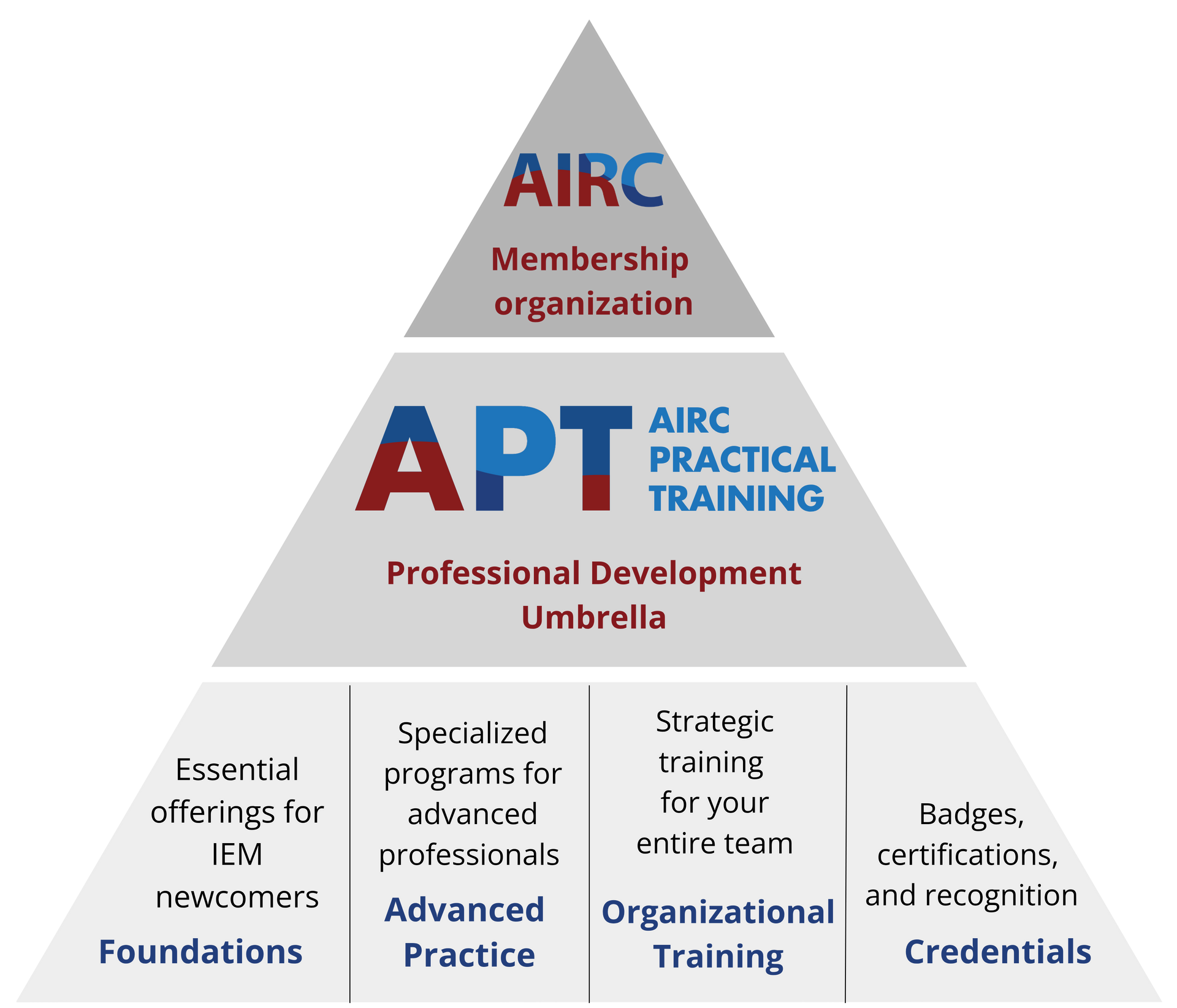
- Professional Development
- International Enrollment Management Resources
- Educational Agency Certification
- Conferences and Events
- Advocacy for the Sector
- Networking and Partnerships
Current & Upcoming Events
Latest News
A new benchmarking report provides timely insights into how U.S. institutions are evolving international recruitment partnerships amid growing market pressures. DENVER, CO, July 28, 2026 – AIRC: The Association of International Enrollment Management recently announced the release of its Institutional Survey on Agency Commission Models, a benchmarking report examining how U.S. secondary schools, colleges, universities, and English language programs structure and manage commission agreements with international student recruitment agencies. Based on responses from 61 institutions across 26 states, the survey offers an in-depth look at the policies, practices, and emerging trends shaping agency partnerships during a period of significant change in global student mobility. As institutions face increased competition for international students, budget constraints, and evolving enrollment strategies, the survey provides valuable data to help international enrollment leaders evaluate their agency relationships, benchmark commission practices, and strengthen transparent, ethical recruitment partnerships. "The international enrollment landscape continues to evolve rapidly, making it more important than ever for institutions to make informed, strategic decisions about their agency partnerships," said Clay Harmon, Executive Director at AIRC. "This report gives the field meaningful benchmarking data while highlighting the growing sophistication of agency management practices across U.S. education." Among the report's key findings: Most institutions use a standardized commission model, often incorporating tiered or escalator structures tied to agency performance. Commission management is typically centralized within international admissions and finance offices. Fixed-fee and net-tuition commission models are replacing traditional gross-tuition percentage models, with the most common structures being 15% of net tuition or fixed payments between $2,000 and $3,500 per enrolled student. Institutions are investing more heavily in agent communication, training, and relationship management, while continuing to prioritize in-country engagement with recruitment partners. Despite growing operational complexity, many institutions continue to manage agency partnerships with relatively limited staffing and resources. The survey also identifies several important challenges facing institutions, including uncertainty around competitive commission rates, increased use of performance-based incentives, and the need to balance financial sustainability with maintaining strong recruitment partnerships. Survey respondents represented a broad cross-section of the U.S. education sector, including four-year colleges and universities, secondary schools, postgraduate institutions, community colleges, and intensive English programs. Nearly 60% of participating institutions enroll fewer than 5,000 full-time equivalent students, reflecting the experiences of the small- and mid-sized institutions that make up much of the international education landscape. Sixty-two percent of respondents were current AIRC members, indicating a strong emphasis on governance, compliance, and quality assurance. AIRC’s Institutional Survey on Agency Commission Models is intended to serve as a practical resource for international enrollment management professionals seeking to benchmark their practices, strengthen agency relationships, and support ethical, student-centered recruitment. To learn more about the survey and access the full report, visit https://www.airc-education.org/research-and-reports. About AIRC: The Association of International Enrollment Management AIRC: The Association of International Enrollment Management is a 501(c)(3) non-profit membership association recognized by the U.S. Department of Justice and the Federal Trade Commission as a Standards Development Organization (SDO). AIRC champions the interests of international students, educational institutions, and educational agencies through the development of professional standards and partnerships that advance effective and strategic practices in international enrollment management. Contact: Clay Harmon, Executive Director AIRC: The Association of International Enrollment Management +1 240-547-6400 Clay.Harmon@airc-education.org

International student recruitment is evolving rapidly. Across major destination countries, policy updates, visa reforms, compliance expectations, and shifting student priorities are reshaping how institutions engage with prospective students around the world. For universities and colleges, these changes present both challenges and opportunities. Success increasingly depends on working with trusted recruitment partners that understand local markets, embrace technology, and prioritize student success. At Study Info Centre , we have seen these changes firsthand. Since our establishment in 2019, we have worked with students, recruitment partners, and institutions across South Asia and emerging international markets. Through this experience, one thing has become clear: sustainable international recruitment is no longer about volume alone. It is about quality, transparency, and long term outcomes. The New Reality of International Recruitment Students today are better informed than ever before. They research institutions extensively, compare study destinations, evaluate graduate outcomes, and seek clear information about costs, career opportunities, and student support services. At the same time, governments and education providers have increased their focus on compliance, student suitability, and the integrity of international education programs. As a result, institutions are placing greater importance on recruitment partners that can help identify suitable students, maintain high ethical standards, and provide accurate guidance throughout the student journey. Why Quality Matters More Than Ever The most successful recruitment strategies focus on attracting students who are academically prepared, financially capable, and genuinely committed to their educational goals. At Study Info Centre , our approach emphasizes careful student assessment, document verification, compliance reviews, and ongoing student support. By focusing on quality from the beginning of the recruitment process, institutions can improve student outcomes while reducing unnecessary risks. This approach benefits everyone involved, including students, institutions, and recruitment partners. The Growing Role of Technology Technology is becoming an increasingly important part of international student recruitment. Recognizing this shift, Study Info Centre has invested significantly in building its own technology infrastructure. Our in house IT team develops and manages proprietary systems designed to improve efficiency, communication, and transparency throughout the recruitment process. Our partner portal helps streamline application management, document tracking, and institutional communication. We have also developed an AI powered interview preparation platform that helps students better understand their chosen course, institution, and study destination while preparing for university credibility interviews and visa assessments. These tools are not designed to replace human guidance. Instead, they enhance the support provided by counselors and admissions teams, helping students become better informed and better prepared. South Asia Continues to Present Strong Opportunities South Asia remains one of the most important regions for international student recruitment. Through our operations in Nepal, Bangladesh, Sri Lanka, Kenya, and the Philippines, we continue to see strong demand for internationally recognized qualifications, industry relevant programs, and institutions that provide clear pathways to career development. At the same time, student expectations are changing. Students increasingly seek practical learning experiences, employability outcomes, industry engagement, and strong support services throughout their studies. For institutions seeking long term growth, understanding these evolving expectations is essential. As Study Info Centre continues its expansion into India and Southeast Asia, we see significant opportunities for institutions looking to diversify their recruitment markets while maintaining a strong focus on quality and compliance. Building Sustainable Partnerships Strong recruitment outcomes are built on strong partnerships. Institutions benefit most when recruitment agencies operate as genuine strategic partners rather than simply application generators. Open communication, shared goals, transparent processes, and a commitment to student success create a foundation for long term growth. At Study Info Centre, we view every institutional partnership as a long term relationship. Our objective is not only to support enrollment growth but also to contribute to positive student experiences and successful educational outcomes. Looking Ahead The international education sector will continue to evolve, and regulatory environments will undoubtedly change. However, the principles that underpin successful recruitment remain constant: integrity, transparency, innovation, and student success. By combining market expertise, technology driven solutions, and a commitment to ethical recruitment practices, institutions and recruitment partners can continue to create meaningful opportunities for students around the world. At Study Info Centre , we remain committed to supporting institutions as they navigate this changing landscape and build sustainable international recruitment strategies for the future.
As institutions navigate increasing competition and uncertainty, expanding the definition of international enrollment may reveal opportunities hiding in plain sight. At Catalyst GEM, we spend a great deal of time talking with institutions about international growth. Whether those conversations focus on enrollment diversification, new markets, changing student demand, or long-term sustainability, one question continues to surface: Where will the next wave of international growth come from? It’s an important question. The international enrollment landscape has become increasingly complex. Competition for students continues to intensify. More countries are competing for market share. Visa policies can shift quickly. At the same time, institutions are being asked to deliver growth with limited resources and increasing pressure to diversify enrollment and revenue streams. As a result, many institutions continue searching for new markets, new recruitment channels, and new ways to attract more internationally mobile students. But what if we are asking the wrong question? What if the next international growth opportunity isn’t defined by where learners go? What if it is defined by who they are? Are We Defining International Enrollment Too Narrowly? For decades, international enrollment has largely been defined through the lens of student mobility. Institutions recruit students who are willing to leave home, obtain a visa, relocate internationally, and pursue their education abroad. That model has created tremendous value for institutions and remains a critical part of international enrollment strategy today. To be clear, this is not an argument against student mobility. Millions of students will continue to pursue education abroad because it aligns with their academic, professional, and personal goals. However, through our work with institutions, we believe a growing opportunity exists beyond this traditional definition of international enrollment. The question institutions should be asking is: Have we become so focused on mobile students that we are overlooking other international learners altogether? The International Learners Many Institutions Aren’t Counting Around the world, there is a growing population of learners seeking career advancement, skills development, and recognized credentials. Unlike traditional international students, however, many of these learners have no desire to leave their jobs, families, or home countries. They are working professionals. They are focused on outcomes. They are seeking upward mobility without geographic mobility. For them, the decision is not primarily about studying abroad. It is about advancing their careers, increasing earning potential, and remaining competitive in an evolving workforce. This audience may not fit the traditional image of an international student, but that doesn’t make them any less international. In fact, they may represent one of the most significant international growth opportunities that many institutions are not actively discussing today. Why This Opportunity Often Goes Unnoticed One of the most interesting observations we have made at Catalyst GEM is that the challenge is rarely demand. More often, the challenge is ownership. International enrollment teams are typically focused on student mobility. Online learning teams often focus on domestic growth. Workforce and professional education teams focus on adult learners and employer engagement. As a result, a growing category of international learners frequently falls between existing institutional structures. Not because institutions don’t care. Not because the opportunity lacks potential. But because it doesn’t fit neatly into how international enrollment has traditionally been defined or managed. The reality is that many institutions are not intentionally overlooking this audience. They simply haven’t historically viewed these learners as part of their international growth strategy. A Different Question for Institutional Leaders In many of our conversations with institutional leaders, discussions about international growth still begin with geography. Which markets should we enter? Which countries should we prioritize? Where should we recruit next? These are important questions. But perhaps there is another question worth asking: Are there international learners we are not currently considering at all? The answer to that question may reveal opportunities that are larger, more scalable, and less dependent on the traditional constraints associated with student mobility. Looking Beyond Mobility The future of international enrollment is unlikely to be defined by a single model. Student mobility will remain an essential part of global higher education. At the same time, a growing population of international learners is pursuing advancement without crossing borders. At Catalyst GEM, we believe institutions that broaden their definition of international opportunity will be better positioned to identify new sources of growth in the years ahead. The next international growth opportunity may not be a new destination country. It may not be a new recruitment channel. It may not even be a new market. It may be a new way of defining who an international learner is. And for institutions willing to look beyond mobility, that opportunity may already be hiding in plain sight.