How Can a Credential Evaluation Help with the Student Visa Process?

August 7, 2024

The student visa process can be challenging to navigate, and it’s even more frustrating when a student works hard to gain university admission and then is denied a student visa. The Department of State conveys that during the student visa interview, students may provide evidence of their academic preparation, non-immigrant intent, and how they will pay their expenses during their time in the United States. However, students often only have mere seconds to prove their case to the consular officer. One of the most common reasons a student is denied their F1 visa is INA section 214(b). These denials mean that the student was not able to prove their serious intent to study in the U.S., or they did not prove their intent to return to their home country upon completion of their studies. How can a professional credential evaluation help your students avoid these denials? 


Prove Program Eligibility 


A credential evaluation validates the academic work a student has completed in their home country and provides the U.S. equivalency of their degree. It ensures the student receives proper credit for their education and can even include a course by course breakdown of credits and grades earned. The credential evaluation report provides information about the institution the student attended, including what level of education was required for admission and whether the institution has the equivalency of U.S. regional accreditation. This report can confirm that the student qualifies for the program they have been admitted to and can clear up confusion for consular officers that may not be as familiar with educational system requirements or specialized programs. This can be especially helpful if students attended institutions in more than one country, followed unconventional educational pathways, or have older credentials. 


Establish the Intent to Study 


It’s also important to demonstrate a clear career pathway during the student visa interview process. Consular officers want to see that a student has serious interest in their studies and a defined plan of how they will be using their new degree in their long-term career plan. A credential evaluation report can show the previous coursework related to the student’s intended program, allowing the student to prove their legitimate interest in continuing their education. It also shows the officer that the student has taken their desire to study in the U.S. seriously and has invested in a credential evaluation report for admissions purposes.   


Demonstrate Non-Immigrant Career Goals 


In addition to proving their intent to study in the U.S., the student must also prove their non-immigrant intent through strong ties to their home country. The credential evaluation report can help the student clearly articulate their intended career, what they have accomplished so far on their career path, and how their intended program of study in the U.S. aligns with their goal. The student should be prepared to explain how their intended program directly ties to what they will do for work upon returning to their home country. If a student has job offers contingent upon completing their U.S. degree, they should bring that documentation to their interview to help establish their non-immigrant intent. 


Unlock Further Opportunities  


Once a student has their F1 visa and completes their studies in the U.S., a credential evaluation report can continue to be beneficial. Students may be required to obtain an internship as part of Curricular Practical Training (CPT), or they may choose to apply for Optional Practical Training (OPT) employment authorization after they graduate. A credential evaluation report helps boost their resume by establishing their previous education and evidencing their skill set. Some students may even be offered jobs that can lead to visa sponsorship, such as through the H-1B visa. The H-1B visa requires evidence of a specialized skill set in specific fields, such as Science, Technology, Engineering, and Mathematics. During the H-1B visa application process, students can use a credential evaluation to prove they hold a qualifying degree from their home country. 


Set Students Up for Success with a Credential Evaluation 


Remember that the F-1 visa is a non-immigrant visa, which requires students to prove their intention is to study in the U.S. and then return to their home country upon completion of their program. A credential evaluation report shows a student’s serious intention in studying, documents their desired career path, and provides clarity to the consular officers reviewing their academic history. As you begin to prepare your students for the upcoming admissions cycle, make sure you set them up for success by including a credential evaluation report as part of their onboarding process. 


For more information on how to select a credential evaluation agency, see our previous blog: What Questions Should an Agent Ask before Selecting a Credential Evaluation Agency? — AIRC (airc-education.org). 


July 31, 2026
A new benchmarking report provides timely insights into how U.S. institutions are evolving international recruitment partnerships amid growing market pressures. DENVER, CO, July 28, 2026 – AIRC: The Association of International Enrollment Management recently announced the release of its Institutional Survey on Agency Commission Models, a benchmarking report examining how U.S. secondary schools, colleges, universities, and English language programs structure and manage commission agreements with international student recruitment agencies. Based on responses from 61 institutions across 26 states, the survey offers an in-depth look at the policies, practices, and emerging trends shaping agency partnerships during a period of significant change in global student mobility. As institutions face increased competition for international students, budget constraints, and evolving enrollment strategies, the survey provides valuable data to help international enrollment leaders evaluate their agency relationships, benchmark commission practices, and strengthen transparent, ethical recruitment partnerships. "The international enrollment landscape continues to evolve rapidly, making it more important than ever for institutions to make informed, strategic decisions about their agency partnerships," said Clay Harmon, Executive Director at AIRC. "This report gives the field meaningful benchmarking data while highlighting the growing sophistication of agency management practices across U.S. education." Among the report's key findings: Most institutions use a standardized commission model, often incorporating tiered or escalator structures tied to agency performance. Commission management is typically centralized within international admissions and finance offices. Fixed-fee and net-tuition commission models are replacing traditional gross-tuition percentage models, with the most common structures being 15% of net tuition or fixed payments between $2,000 and $3,500 per enrolled student. Institutions are investing more heavily in agent communication, training, and relationship management, while continuing to prioritize in-country engagement with recruitment partners. Despite growing operational complexity, many institutions continue to manage agency partnerships with relatively limited staffing and resources. The survey also identifies several important challenges facing institutions, including uncertainty around competitive commission rates, increased use of performance-based incentives, and the need to balance financial sustainability with maintaining strong recruitment partnerships. Survey respondents represented a broad cross-section of the U.S. education sector, including four-year colleges and universities, secondary schools, postgraduate institutions, community colleges, and intensive English programs. Nearly 60% of participating institutions enroll fewer than 5,000 full-time equivalent students, reflecting the experiences of the small- and mid-sized institutions that make up much of the international education landscape. Sixty-two percent of respondents were current AIRC members, indicating a strong emphasis on governance, compliance, and quality assurance. AIRC’s Institutional Survey on Agency Commission Models is intended to serve as a practical resource for international enrollment management professionals seeking to benchmark their practices, strengthen agency relationships, and support ethical, student-centered recruitment. To learn more about the survey and access the full report, visit https://www.airc-education.org/research-and-reports. About AIRC: The Association of International Enrollment Management AIRC: The Association of International Enrollment Management is a 501(c)(3) non-profit membership association recognized by the U.S. Department of Justice and the Federal Trade Commission as a Standards Development Organization (SDO). AIRC champions the interests of international students, educational institutions, and educational agencies through the development of professional standards and partnerships that advance effective and strategic practices in international enrollment management. Contact: Clay Harmon, Executive Director AIRC: The Association of International Enrollment Management +1 240-547-6400 Clay.Harmon@airc-education.org
July 6, 2026
International student recruitment is evolving rapidly. Across major destination countries, policy updates, visa reforms, compliance expectations, and shifting student priorities are reshaping how institutions engage with prospective students around the world. For universities and colleges, these changes present both challenges and opportunities. Success increasingly depends on working with trusted recruitment partners that understand local markets, embrace technology, and prioritize student success. At Study Info Centre , we have seen these changes firsthand. Since our establishment in 2019, we have worked with students, recruitment partners, and institutions across South Asia and emerging international markets. Through this experience, one thing has become clear: sustainable international recruitment is no longer about volume alone. It is about quality, transparency, and long term outcomes. The New Reality of International Recruitment Students today are better informed than ever before. They research institutions extensively, compare study destinations, evaluate graduate outcomes, and seek clear information about costs, career opportunities, and student support services. At the same time, governments and education providers have increased their focus on compliance, student suitability, and the integrity of international education programs. As a result, institutions are placing greater importance on recruitment partners that can help identify suitable students, maintain high ethical standards, and provide accurate guidance throughout the student journey. Why Quality Matters More Than Ever The most successful recruitment strategies focus on attracting students who are academically prepared, financially capable, and genuinely committed to their educational goals. At Study Info Centre , our approach emphasizes careful student assessment, document verification, compliance reviews, and ongoing student support. By focusing on quality from the beginning of the recruitment process, institutions can improve student outcomes while reducing unnecessary risks. This approach benefits everyone involved, including students, institutions, and recruitment partners. The Growing Role of Technology Technology is becoming an increasingly important part of international student recruitment. Recognizing this shift, Study Info Centre has invested significantly in building its own technology infrastructure. Our in house IT team develops and manages proprietary systems designed to improve efficiency, communication, and transparency throughout the recruitment process. Our partner portal helps streamline application management, document tracking, and institutional communication. We have also developed an AI powered interview preparation platform that helps students better understand their chosen course, institution, and study destination while preparing for university credibility interviews and visa assessments. These tools are not designed to replace human guidance. Instead, they enhance the support provided by counselors and admissions teams, helping students become better informed and better prepared. South Asia Continues to Present Strong Opportunities South Asia remains one of the most important regions for international student recruitment. Through our operations in Nepal, Bangladesh, Sri Lanka, Kenya, and the Philippines, we continue to see strong demand for internationally recognized qualifications, industry relevant programs, and institutions that provide clear pathways to career development. At the same time, student expectations are changing. Students increasingly seek practical learning experiences, employability outcomes, industry engagement, and strong support services throughout their studies. For institutions seeking long term growth, understanding these evolving expectations is essential. As Study Info Centre continues its expansion into India and Southeast Asia, we see significant opportunities for institutions looking to diversify their recruitment markets while maintaining a strong focus on quality and compliance. Building Sustainable Partnerships Strong recruitment outcomes are built on strong partnerships. Institutions benefit most when recruitment agencies operate as genuine strategic partners rather than simply application generators. Open communication, shared goals, transparent processes, and a commitment to student success create a foundation for long term growth. At Study Info Centre, we view every institutional partnership as a long term relationship. Our objective is not only to support enrollment growth but also to contribute to positive student experiences and successful educational outcomes. Looking Ahead The international education sector will continue to evolve, and regulatory environments will undoubtedly change. However, the principles that underpin successful recruitment remain constant: integrity, transparency, innovation, and student success. By combining market expertise, technology driven solutions, and a commitment to ethical recruitment practices, institutions and recruitment partners can continue to create meaningful opportunities for students around the world. At Study Info Centre , we remain committed to supporting institutions as they navigate this changing landscape and build sustainable international recruitment strategies for the future.
June 26, 2026
As institutions navigate increasing competition and uncertainty, expanding the definition of international enrollment may reveal opportunities hiding in plain sight. At Catalyst GEM, we spend a great deal of time talking with institutions about international growth. Whether those conversations focus on enrollment diversification, new markets, changing student demand, or long-term sustainability, one question continues to surface: Where will the next wave of international growth come from? It’s an important question. The international enrollment landscape has become increasingly complex. Competition for students continues to intensify. More countries are competing for market share. Visa policies can shift quickly. At the same time, institutions are being asked to deliver growth with limited resources and increasing pressure to diversify enrollment and revenue streams. As a result, many institutions continue searching for new markets, new recruitment channels, and new ways to attract more internationally mobile students. But what if we are asking the wrong question? What if the next international growth opportunity isn’t defined by where learners go? What if it is defined by who they are? Are We Defining International Enrollment Too Narrowly? For decades, international enrollment has largely been defined through the lens of student mobility. Institutions recruit students who are willing to leave home, obtain a visa, relocate internationally, and pursue their education abroad. That model has created tremendous value for institutions and remains a critical part of international enrollment strategy today. To be clear, this is not an argument against student mobility. Millions of students will continue to pursue education abroad because it aligns with their academic, professional, and personal goals. However, through our work with institutions, we believe a growing opportunity exists beyond this traditional definition of international enrollment. The question institutions should be asking is: Have we become so focused on mobile students that we are overlooking other international learners altogether? The International Learners Many Institutions Aren’t Counting Around the world, there is a growing population of learners seeking career advancement, skills development, and recognized credentials. Unlike traditional international students, however, many of these learners have no desire to leave their jobs, families, or home countries. They are working professionals. They are focused on outcomes. They are seeking upward mobility without geographic mobility. For them, the decision is not primarily about studying abroad. It is about advancing their careers, increasing earning potential, and remaining competitive in an evolving workforce. This audience may not fit the traditional image of an international student, but that doesn’t make them any less international. In fact, they may represent one of the most significant international growth opportunities that many institutions are not actively discussing today. Why This Opportunity Often Goes Unnoticed One of the most interesting observations we have made at Catalyst GEM is that the challenge is rarely demand. More often, the challenge is ownership. International enrollment teams are typically focused on student mobility. Online learning teams often focus on domestic growth. Workforce and professional education teams focus on adult learners and employer engagement. As a result, a growing category of international learners frequently falls between existing institutional structures. Not because institutions don’t care. Not because the opportunity lacks potential. But because it doesn’t fit neatly into how international enrollment has traditionally been defined or managed. The reality is that many institutions are not intentionally overlooking this audience. They simply haven’t historically viewed these learners as part of their international growth strategy. A Different Question for Institutional Leaders In many of our conversations with institutional leaders, discussions about international growth still begin with geography. Which markets should we enter? Which countries should we prioritize? Where should we recruit next? These are important questions. But perhaps there is another question worth asking: Are there international learners we are not currently considering at all? The answer to that question may reveal opportunities that are larger, more scalable, and less dependent on the traditional constraints associated with student mobility. Looking Beyond Mobility The future of international enrollment is unlikely to be defined by a single model. Student mobility will remain an essential part of global higher education. At the same time, a growing population of international learners is pursuing advancement without crossing borders. At Catalyst GEM, we believe institutions that broaden their definition of international opportunity will be better positioned to identify new sources of growth in the years ahead. The next international growth opportunity may not be a new destination country. It may not be a new recruitment channel. It may not even be a new market. It may be a new way of defining who an international learner is. And for institutions willing to look beyond mobility, that opportunity may already be hiding in plain sight.
May 8, 2026
As a member of the U.S. for Success Coalition’s Advisory Council, we are pleased to share the following updates from the U.S. for Success Coalition with the AIRC community. In spite of a continuously challenging policy environment, we have collectively achieved important milestones across each of the four interconnected pillars of our strategy: Mobilizing and supporting champions of our issues Educating and activating influential allies Promoting a positive narrative in the media Leveraging the strengths of our members Here are a few highlights: Introduction of Bipartisan Legislation to Codify Optional Practical Training Our efforts to strengthen relationships with our champions on Capitol Hill and to collaborate with allies who share our interests are yielding results. In March, we helped build support for the introduction of the Keep Innovators in America Act (H.R. 8013) , federal bipartisan legislation to protect and codify the Optional Practical Training (OPT) program, which in turn, helps Americans to succeed. When the bill was introduced , the U.S. for Success Coalition and more than a dozen of our members announced their support, representing a broad section of higher education, business, and immigration organizations. Thank you to the following organizations from the coalition that endorsed the bill upon introduction: AILA, AIFS, AIRC: The Association of International Enrollment Management, Alliance for International Exchange, American Association of Collegiate Registrars and Admissions Officers, Council of Graduate Schools, EnglishUSA, FWD.us, Global Detroit, NAFSA: Association of International Educators, Presidents' Alliance on Higher Education and Immigration, Shorelight, Studyportals, and TESOL International Association. Following the bill’s introduction and in anticipation of more attacks on OPT to come, we convened a coalition-wide OPT strategy meeting . We continue working with the House bill’s co-sponsors on securing more support for the legislation and exploring which of our champions in the Senate might be best positioned to introduce their version of the bill. If you have interest in supporting these efforts, please let us know by emailing info@usforsuccess.org using the subject line: OPT Advocacy. Here are a few quick links to continue to build support for OPT with allies and policymakers: Priority Bill Spotlight by US4S coalition member, FWD.us Press releases from the bill’s sponsors and from our Coalition Action Alert from US4S Executive Committee member, NAFSA, to urge cosponsorship of the bill OPT Strategy Meeting Slidedeck Next steps: Together, we must continue to educate Congress that protecting OPT is a practical step Congress can take to support economic growth, workforce development, and educational excellence. Our topline message is that Optional Practical Training benefits Americans. The program: Helps attract international students, whose tuition fees then make U.S. higher education more affordable for American students and families Creates jobs for American workers Fills labor shortage gaps in high-demand fields with individuals educated at U.S. colleges and universities Priorities for our collective action: Secure additional cosponsors for the House bill Seek bipartisan cosponsors in the Senate Continue to encourage those who have influence with the Administration, including allies in the business sector, Republican members of Congress, and state-level leaders, to quietly urge the Administration to preserve OPT. Dignity Act Builds Momentum On March 19, the U.S. for Success Coalition’s Executive Director and one of our Executive Committee members, the Presidents’ Alliance on Higher Education and Immigration, joined with other stakeholders from across the nation, representing families, faith groups, businesses, educators, and immigration advocates, to advocate for the DIGNITY Act of 2025. As you likely recall, the bill includes important provisions promoting American prosperity and innovation that will help the U.S. to compete for international students. Thanks in part to our coalition’s efforts, the bill continues to gain bipartisan support. To date, there are 39 bipartisan cosponsors and counting. Student Visa Processing as a National Priority In March, the State Department finally released data that showed significant declines in student visa issuance. On April 8, 2026, our coalition sent a letter urging the U.S. State Department to prioritize international student and scholars visa processing during the upcoming peak season for visa applications, consistent with the approach taken by administrations of both parties in the past. The letter notes that the United States continues to face increasing competition from other nations for global talent, urging that every qualified and vetted international student who seeks to study at one of our many academic programs be able to secure a timely visa appointment for approval in advance of their studies. The letter makes the case that when international students choose the U.S, we all win . View the press release , which includes key facts showing how international students benefit Americans, and read the letter to the Department of State. Promoting a Positive Narrative and Making the Case for International Students Contributing to American Success Following on the successful off-the-record bipartisan briefings we held in November and December with both the House and Senate, we have been actively educating about how international students help Americans succeed by expanding educational opportunities for U.S. students, creating jobs, filling critical skills gaps, and contributing to our local economies each year. Part of that work has included building on the excellent research by our Hill briefing speakers, Stuart Anderson, Executive Director, National Foundation for American Policy, and Michael Clemens, Professor of Economics, George Mason University; Senior Fellow, Peterson Institute for International Economics, among others. In February, we convened some of the world’s top researchers on immigration and the economy to discuss their latest research. View highlights of topline findings related to how international students contribute to U.S. competitiveness. Building upon the vitally important message testing we conducted last year with generous support from US4S Executive Committee Members (ETS, NAFSA, and Shorelight), we are now planning a digital campaign focused on key members of Congress with strong potential to champion international student policy issues. We will be in touch in the coming weeks about that campaign so that you can help to amplify the message. Strengths of our Members: The Coalition’s Executive Committee continues to drive our strategy and to actively collaborate on implementing our agenda to maintain the U.S. #1 position in international students, with invaluable input and counsel from our Advisory Council . This year, we have also added four new members to the Coalition, including International Student Resource Center (ISRC), JBI, Medforth Global Healthcare Education, and WERC. Each of these new members brings important subject matter expertise, networks, and commitment to our shared advocacy agenda. Each of our coalition members continues to provide relevant data and real-life examples of impact, to leverage their relationships with policymakers, and act collectively to advocate for visa and immigration policies that help the U.S. to remain competitive. To highlight just a few recent reports you may wish to use in your own advocacy: Keystone Education Group → Student Interest and Perceptions : A recent survey demonstrates that student interest in the United States remains down, but stable and shows that policies may be impacting overall perceptions of U.S. quality. Shorelight → Beyond the Interview: A Decade of Student Visa Denials and What Comes Next : Updated April 2026; analyzes 2015–2025 visa denial trends and links them to enrollment decline and access barriers. ApplyBoard → Top Trends in International Education for 2025 and Beyond: Navigating Global Student Mobility Fl a gship trends report on global student demand, policy impacts, and shifting destination preferences. Global Detroit → Global Detroit released the first state data report to use new federal data tracking international students working after their graduation. The findings prove that international students are a massive source of high-skilled talent, helping Michigan employers to fill tens of thousands of critical positions in science, technology, engineering and mathematics (STEM). IDP Education →The most common post-graduate employment pathway for international students in the U.S. is Optional Practical Training (OPT). In IDP’s survey , students were asked how changes to post-study work (PSW) policies such as OPT would affect their decision to study in a particular destination. If no post-study work visa were available, 66% would choose a different country to study or reconsider their options. Upcoming Events We look forward to seeing many of you at NAFSA’s annual conference in Orlando, Florida, where we will have two special meetings for US4S members on Wednesday, May 27: 9:30-10:30am ET, US4S Members-only Strategy Meeting, Room W107 Convention Center 12-12:30pm ET, US4S Session, NAFSA Pavilion, Expo Hall As a reminder, here is what you can do now: Urge Members of Congress to support a bill that would codify OPT. Urge the State Department to prioritize student visa processing. Let us know if you need support in partnering with influential allies who can weigh in with the Administration. If you have questions or have resources that can help support other coalition members in their work to facilitate international student success, please don’t hesitate to email us at info@usforsuccess.org . 
April 20, 2026
DENVER, CO, March 13, 2026 – AIRC is pleased to announce a new strategic partnership with S.W.I.P.E. (Schools with International Programs of Excellence) , a network of K-12 international student program administrators committed to the highest standards of international student support and program development. Plans for the partnership include a number of initiatives in which AIRC and S.W.I.P.E. will share their knowledge, expertise, and professional development opportunities with each other's members, thus strengthening the international enrollment management ecosystem and enhancing partnership opportunities between association members. According to S.W.I.P.E.’s Executive Director, Anna DeJulia, “S.W.I.P.E. is excited to partner with AIRC to bring greater visibility to K–12 international schools within the global recruitment ecosystem. By bringing the K-12 school, agent, and post-secondary sectors together in one place, we are creating new opportunities, opening the door for stronger collaboration, clearer pathway opportunities, and strengthening the ecosystem that will ultimately help our international students thrive.” According to AIRC’s Executive Director, Clay Harmon, “In a time of global student mobility shifts, we are pleased to partner with S.W.I.P.E. to expand our knowledge base and assist our members in diversifying their portfolios. Our partnership will help to ensure that international students at every stage of their educational journey are guided by practitioners dedicated to upholding the highest standards in international enrollment management.” About S.W.I.P.E (Schools with International Programs of Excellence) S.W.I.P.E. is a community of K-12 international student program administrators committed to the highest standards of international student support and program development. The SWIPE community supports excellence at the K-12 level through professional development, collaboration, advocacy, and promotion of member programs. About AIRC: The Association of International Enrollment Management AIRC: The Association of International Enrollment Management is a 501(c)(3) non-profit membership association recognized by the U.S. Department of Justice and the Federal Trade Commission as a Standards Development Organization (SDO). AIRC champions the interests of international students, educational institutions, and educational agencies through the development of professional standards and partnerships that advance effective and strategic practices in international enrollment management. Contact: Clay Harmon, Executive Director AIRC: The Association of International Enrollment Management +1 240-547-6400 Clay.Harmon@airc-education.org
March 27, 2026
Before COVID, most evaluation companies would have frowned upon accepting emailed documents. To authenticate documents, typically original documents or official documents sent in a sealed envelope are required. The pandemic changed all of that. When the world shut down, we had to consider other secure ways to receive academic documents from international students. The question still remained – should we accept these emailed credential scans? Rise of digital documents For years, ECE resisted accepting emailed documents because we did not consider them official. As the pandemic spread around the world, institutions began asking that we accept emailed documents while their offices were closed for health reasons. A few years later, what started as a temporary solution has become acceptable practice. While we were willing to work with emailed documents, we initially considered it a temporary measure aimed at helping institutions deal with pandemic shutdowns and the resulting limited access to office space. As the pandemic subsided, most office spaces re-opened, and official documents were available again for shipping. Interestingly, the pandemic inadvertently started a new trend: widespread adoption of digital documents and electronic document portals by many institutions around the world. It is easy, secure, and environmentally friendly. Save the trees! With that said, does ECE still accept emailed documents? Yes, we still accept emailed documents from relevant sources. However, we have established an email authentication process that each emailed document goes through before it is accepted for evaluation purposes. We also only consider accepting emailed, authenticated documents if no digital transfer or electronic portal option is available. Emails are not a substitute for established trusted practices offered by the institution in question. Why do we need to vet emails? Primarily, emails can be spoofed to pass off fraudulent documents as legitimate. Second, emails could be sent by an unknown source, which would render the documents unofficial or unacceptable. Thus, we prioritize email authentication practices when dealing with emailed documents. We have become very efficient in knowing what to look for and when to hold up the evaluation for further investigation. Adventures in email authentication One of our interesting discoveries involved an email sent to us from an African university account by what appeared to be a member of the academic registry staff, judging by the title listed in the email. Although the person was a publicly listed staff member of the university, the email address for the account was different by one letter from what was publicly listed on the university's website. The correct email address used the person's first name initial followed by the full last name (e.g., hsmith). The fake email address used the first and middle name initials followed by the last name (e.g., hasmith). A small detail that is amazingly easy to miss. Another issue was that the email transmission failed to pass through the DMARC and DKIM email security protocols and indicated origin from a server we have not seen used in any prior communications with the same university. Something wasn’t adding up! Another case involved an email from a university in the Middle East, but from a completely unverifiable Gmail account. While it is common for some institutions to use Gmail accounts, it is not acceptable if we cannot verify those accounts on their website or through other official means. In this instance, we contacted a known contact at the university and notified the applicant that we were reaching out for more information. Not too long after, we received a response indicating the documents were not authentic, and the email address in question was not authorized for official communications. We took another step and used a free email checker tool (ECE uses the Free Email Verifier by Wiza) to see if the email address was still active (which it was when we first reviewed this case). Lo and behold, the email address was no longer deliverable. We never found out whether the person worked at the university, but we now know that whoever sent the email was not authorized to do so. The value of email authentication became even more apparent when we received a message from a reputable email address of a university. From the looks of it, it was a regular official email with attached academic documents. Nothing of note there. However, when we inspected the message header more closely, the red flags popped up. The email transmission failed several authentication protocols, which was unusual for messages received from what was considered an official email address. It was enough to hold up the evaluation process and contact the university for verification. In all these cases, we confirmed that the emailed documents were fraudulent, further demonstrating the importance of exercising caution when working with emailed documents. We will be sharing a more detailed resource on email authentication via the Connection Advantage soon. In the meantime, the advice is: “know your sender and verify how the email was sent." Happy emailing, everyone! 
By Clay Harmon March 18, 2026
Dear Colleagues, A few weeks ago, the US Department of State finally released its F-1 visa issuance data for last summer, confirming what we already knew to be true: the US issued significantly fewer student visas in 2025. The total decline of 36% is the largest single-year decline on record other than what we experienced during the COVID-19 pandemic. This sudden, precipitous drop in student mobility to the United States is due solely to unilateral, unpredictable, and unhelpful policy changes under the Trump administration. It has had real impacts on AIRC members of all types, many of whom have contacted us to express deep concerns for the immediate and medium-term future. Under these difficult circumstances, our mission and our community are more important than ever. I want to assure you that AIRC is here for you throughout 2026 and beyond:  AIRC events provide concrete, solutions-oriented knowledge and data to help equip our members for new opportunities and markets. For example, this year's Spring Symposium examines the rise of global destination markets and how our field can strategically respond. Registration is open now ! I hope to see you in Orlando on Monday May 25. And save the date for AIRC's 18th Annual Conference in Dallas, the first week of December 2026. Our most critical moral and strategic imperative right now is to take the best care we possibly can of our current and future students. To that end, AIRC continues our #WeAreHereforYou campaign through our 2026 webinar series . The series focuses on practical advice and resources for serving international students during challenging times. AIRC continues to offer valuable member benefits and resources that help members advance their international enrollment management strategies, including networking and partnership opportunities, IEM resources, conference and events, and professional development opportunities. The membership renewal period will begin on May 1, and we encourage you to stay involved and continue engaging with the AIRC community. Now is the time to lean in. On the advocacy front, AIRC continues to collaborate with our US for Success Coalition partners to push for a better policy environment, through actions like amicus briefs, support letters, and action alerts. Although the administration's regulatory actions are counterproductive, international education and exchange still have solid support throughout the federal government and in Congress. Stay tuned for more detail on this point very soon - hopefully later this week. There is no denying that 2026 is a tough time for our community. But we will persevere because our mission - and our students - are worth it. I am continually amazed by AIRC members' grit, determination, and "happy warrior" ethos. As always, I welcome your input on how we can better serve you and advance our mission. Please feel free to contact me directly anytime at clay.harmon@airc-education.org . Warm regards, Clay Harmon, EdD Executive Director AIRC: The Association of International Enrollment Management
February 18, 2026
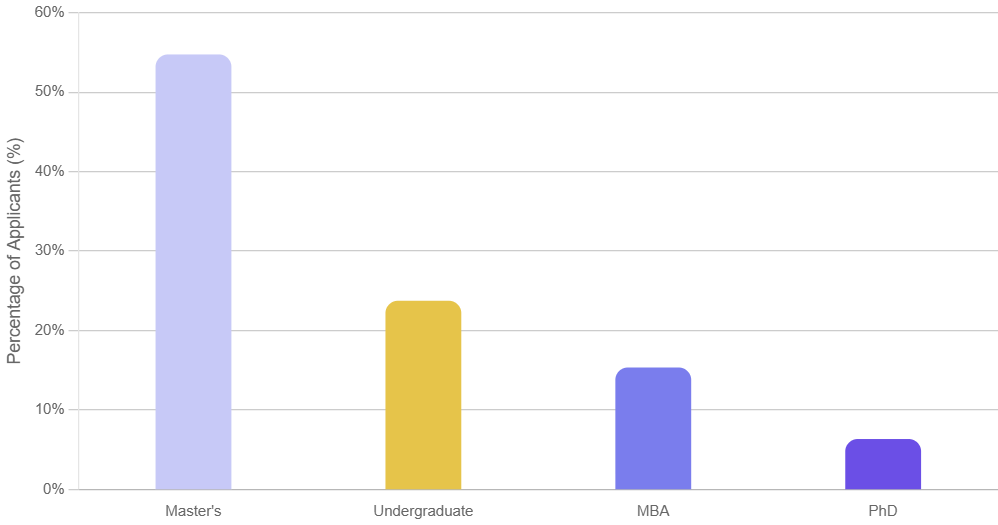
Krutika Thalnerkar Senior Content Writer | Leap Scholar If 2024 was about “wait and watch,” 2025 was the year Indian students officially broke the mold. We have seen a massive transition from “hoping for the best” to “calculating the best”, where every degree is scrutinised for its global market value. After analyzing the journeys of 3 million students, the data tells a powerful story: In 2026, you aren’t just an applicant; you are a strategic investor. The old question “Can I afford to go?” has been replaced by the high-stakes reality: “What will this degree actually give me?“ Beyond the traditional hubs, a “Great Destination Shift” is underway. From the growing interest in the UAE to the strategic rise of tuition-free Germany, Indian students are redrawing the global map in search of affordable excellence. With AI Master’s interest skyrocketing and working professionals leading the race to upskill, the 2026 intake is no longer about just a degree; it is about securing a seat in the future of work. Aspirant Profile & Demographics The demographic profile of Indian aspirants in 2024–25 exhibits a structural shift compared to the cohort from three years earlier. Analysis of data from over three million applicants and survey respondents on the Leap Scholar platform indicates a transition in the broader educational landscape. Age Distribution  While the primary age distribution follows established patterns, granular analysis reveals specific compositional changes: The data indicates that while the majority of aspirants (65.5%) are in the 18-25 age bracket, there is a significant cohort of mature students. Notably, over one-third of the applicants are aged 26 or older, suggesting a trend of working professionals seeking qualifications later in their careers. Gender Distribution The gender gap remains evident, with male applicants constituting 58% of the aspirant base compared to 42% for females. However, this gap is narrowing, particularly with more women pursuing STEM programmes abroad. What Students Are Interested In Studying - Degree Level Distribution 2025
January 2, 2026
Over the last couple of years, we have seen the emergence of AI’s use in international student recruitment and how it is reshaping the industry. There seems to be a mix of early, enthusiastic adopters, and those who just hope it will go away. But it isn’t going away. Our latest student survey found that almost one-third (30%) of respondents would use AI to write their applications, with 40% saying maybe, but they were unsure of whether it was ‘allowed’. We owe it to the students we serve, to incorporate AI into our ways of working for better service in recruitment, make the process transparent so they are clear on terms of use, and offer guidance and AI’s best practices to ensure their readiness for the global economy. And we must do it in a safe, compliant way. Some institutions and recruitment agencies are also benefitting from AI’s use, from optimising processes to reduce peak workload administration to offering on-demand information to students across different time zones with chatbots. Those who have already integrated AI are a step ahead. Its advantages continue to grow as more stringent visa checks and compliance pressures increase already stretched workloads processing student applications to the US. Historically, the admissions process has been highly time-consuming and prone to human error. But with the use of AI, one can harness the data and predictive power to make it all the more efficient. A competitive advantage, recruiting the best students AI’s ability to screen and prioritise high-quality applications ultimately means students can make their destination decisions more quickly. This speed is a competitive advantage; students are more likely to act on an offer rather than wait for others. This ensures the best students are engaged early, improving the quality of your applicant pool. Edvoy’s Genie is an AI course matching tool. It analyses 200+ data points to assess the likelihood of a student’s application success. The data points include academic qualifications, budget, and entry requirements. By pre-qualifying the student much before the application is submitted, AI helps save time for universities, which would otherwise be wasted on ineligible applicants. AI in compliance, navigating stringent visa checks Any change to visa requirements puts more pressure on compliance procedures. AI can conduct thorough pre-vetting processes to catch any inconsistencies, which is a major boost to application integrity. It can also be used to assess mock interviews for credibility checks, ensuring the student’s verbal communication aligns with their written application. AI can also help as a final compliance check, where it analyses student profiles and flags unexplained study gaps or complex financial histories for mandatory human intervention before the issuance of the I-20 form. This helps universities maintain their reputation and high visa success rates. With this strategic handholding by AI, recruitment partners and universities can focus on more important tasks, such as personalised student guidance and relationship-building. The ethical responsibility of AI But with every powerful tool comes ethical responsibility. At Edvoy, we firmly believe that while AI helps boost efficiency and processes, its predictive nature comes with the potential bias of what a successful applicant is. Leaving it unchecked could result in unfairness. Edvoy uses a number of tools to actively safeguard us against existing biases. For example, the data supplied to our systems, such as Genie, covers diverse demographic groups to ensure balanced outcomes. Additionally, it’s built with XAI or Explainable AI, which helps humans understand the rationale behind the AI results (and in our case, Genie’s recommendations), making it easy for us to monitor and improve the system. AI isn’t going anywhere; it has the ability to greatly enhance our ways of working, and can make education more accessible across the globe. We must work together to inform students of best practices and ensure that transparency and ethical accountability remain at the heart of every use.
November 21, 2025
As global student mobility enters a period of rapid transformation, U.S. colleges and universities are facing new challenges: shifting visa trends, rising competition from Canada and the UK, economic pressures on families, and a saturated digital recruitment environment. In this landscape, strong, ethical, and data-driven partnerships between universities and recruitment agencies are emerging as the most reliable solution for sustained international enrollment growth. With India poised to remain the world’s largest outbound higher education market , and the U.S. retaining its spot as the number-one study destination, universities must rethink how they engage with agencies to build resilience, quality, and long-term recruitment success. This blog explores what U.S. institutions must do differently in 2025 , how recruitment partners like Texas Review add value, and what a successful university–agency ecosystem looks like in the years ahead. Why Strong Partnerships Matter Now More Than Ever 1. Student Markets Are Volatile  Visa changes, geopolitical shifts, affordability concerns, and job market news can influence student flows overnight. Agencies on the ground provide real-time market intelligence universities cannot access directly. 2. Digital Marketing Alone Is Not Enough Students still want: In-person guidance Application support Financial planning help Visa preparation Career pathway counselling Agents remain critical touchpoints for students and families. 3. Quality Over Quantity Is The New Priority Universities are increasingly focused on: Retention Career outcomes Diversity Academic readiness Well-trained, high-integrity agencies play a major role in ensuring students are the right fit. The Four Pillars of a Strong University–Agency Partnership To thrive in 2025 and beyond, universities must shift from transactional interactions to structured, collaborative, and transparent relationships. Pillar 1: Shared Market Intelligence & Data-Driven Decision Making Universities often rely on historical trends, but markets move fast. Agencies provide: Real-time insights on student preferences Competitive pricing intelligence Demand by program and study level Barriers affecting specific regions Policy awareness (visa, immigration, scholarship trends) In return, universities should share: Conversion data Program competitiveness Application volume insights Enrollment bottlenecks This two-way intelligence helps institutions adjust programs, pricing, marketing, and communication strategies. Pillar 2: High-Quality Training for Counsellors One of the biggest gaps in international recruitment is counsellor-level program understanding . Universities should offer: Monthly product trainings Webinars with faculty Recorded demos of labs, facilities, and student services Detailed admissions guidelines Clear visa and compliance updates Scholarship and assistantship insights When counsellors are well-trained, they: Recommend the right programs Improve student preparedness Reduce deferrals and drop-offs Enhance application accuracy Boost conversion Pillar 3: Streamlined Admissions & Student Experience Indian students are heavily influenced by how fast and transparent the admissions process is. Universities should: Make Applications Easier Accept unofficial transcripts for initial review Offer digital document verification Allow trusted partners to pre-screen applications Reduce dependency on expensive credential evaluation services Improve Processing Speed 6–8 week decisions no longer work. Students expect: 10–20 day initial review Fast I-20 issuance Clear communication on missing documents Increase Transparency Provide agents with: Reasons for rejections File status dashboards Timeframes for review stages A transparent system builds trust and speeds conversions. Pillar 4: Collaborative Marketing & Outreach Agencies like Texas Review run: Multi-city education fairs Targeted school and college outreach Digital campaigns Counsellor training meets Alumni meetups University spot admissions sessions Universities should participate through: Faculty-led talks Virtual masterclasses Program spotlight sessions Alumni testimonials On-ground visits at peak times This creates massive visibility and positions institutions as top-choice destinations. How Texas Review Adds Value to University Partners Texas Review, with its 13+ years of experience in U.S. student recruitment, brings a combination of scale, quality, and insights: 1. Market Leadership 350-member recruitment team Strong presence across India’s Tier 1, 2, and 3 cities Extensive student counselling reach Deep understanding of U.S. program trends 2. Ethical, High-Compliance Recruitment Counsellor training Pre-screening based on university criteria Document verification Visa readiness checks SEVIS and compliance awareness 3. Program Promotion Strategy Especially for STEM programs beyond Computer Science: Public health Environmental sciences Robotics Data analytics Bioinformatics Supply chain Aviation / aerospace Healthcare informatics 4. Conversion-Focused Admission Support Application-quality checks Timely submissions Scholarship guidance Visa preparation 5. In-depth Market Analytics Region-wise demand Program-specific interest levels Behavioural shifts Competitor insights What Universities Can Do in 2025 to Build Sustainable Pipelines 1. Diversify Program Marketing Move beyond CS and promote: Emerging STEM Research-intensive programs Affordable tracks Hybrid and co-op oriented degrees 2. Strengthen Affordability Options Offer: Scholarships for Indian students Early payment discounts Research assistantships Instalment-based tuition plans 3. Build Consistent Communication Students and agents value: Clear deadlines Transparent requirements Response timelines Visa guidance Real employability stories 4. Invest in India With large-volume recruitment, universities should allocate: Dedicated regional managers Annual faculty visits Exclusive agent workshops Co-branded marketing campaigns 5. Prioritize Long-Term Partnerships Instead of cycling through dozens of agencies, institutions should cultivate long-term relationships with high-quality, high-capacity partners . Conclusion As international education becomes increasingly competitive, strong university–agency partnerships are no longer optional — they are essential. The institutions that succeed in 2025 and beyond will be those that: Embrace collaboration Prioritize transparency Respond to real-time market needs Invest in counsellor training Support affordability Promote emerging STEM fields By working closely with experienced partners like Texas Review, U.S. universities can build resilient, scalable, and high-quality recruitment pipelines that benefit students, institutions, and the global workforce.
Read More Blogs